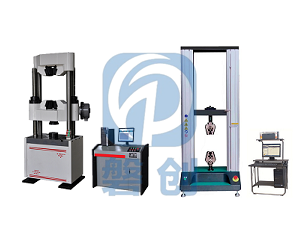
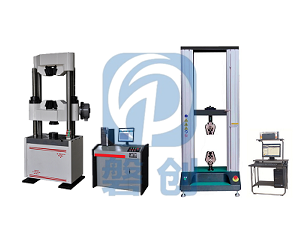
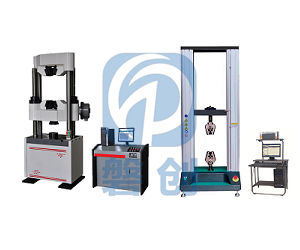
Both the electronic universal testing machine and the hydraulic universal testing machine belong to the category of material mechanics testing instruments. However, they have their own characteristics in terms of structural design, performance in use, and application scope. Users can decide whether to choose an electronic universal testing machine or a hydraulic universal testing machine based on the specific usage environment of their industry. The differences between electronic universal testing machines and hydraulic universal testing machines are as follows:
1. Structural features
The electronic universal testing machine mainly uses servo motors as the power source and lead screws and nuts as the actuating components to control the speed of the moving crossbeam of the testing machine. At present, there are mainly two forms in transmission control: synchronous belts and reducers. All electronic universal testing machines use load sensors for force measurement.
The hydraulic universal testing machine mainly uses a high-pressure hydraulic source as the power source and manual valves, servo valves or proportional valves as control components for control. Ordinary hydraulic universal testing machines can only be manually loaded by hand and belong to open-loop control systems. Due to the influence of price factors, hydraulic pressure sensors are generally used as force sensors. The electro-hydraulic servo universal testing machine, on the other hand, uses servo valves or proportional valves as control components for control. Some domestic manufacturers have also adopted high-precision load sensors for force measurement.
2. Performance in use
The electronic universal testing machine does not require an oil source, so it is cleaner and more convenient to use and maintain. Its test speed range can be adjusted. The test speed can reach 0.001mm/min to 1000mm/min, and the speed ratio can be as much as 1 million times. The test stroke can be determined as needed, which is more flexible. The force measurement accuracy is high, and some can even reach 0.2%. It is small in size, light in weight, large in space, and convenient to be equipped with corresponding devices for various material mechanics tests, truly achieving multiple uses in one machine. At present, the electronic universal testing machines produced by the mainstream testing machine manufacturers in China can all achieve the so-called three closed-loop control of load control, strain control and displacement control.
The hydraulic universal testing machine has a relatively low testing speed due to the limitation of the oil source flow rate. Manual hydraulic universal testing machine is relatively easy to operate and inexpensive, but its control accuracy is relatively low. The electro-hydraulic servo universal testing machine, compared with the electronic universal testing machine, has no inferior control accuracy except for its lower speed. The microcomputer-controlled electro-hydraulic servo universal testing machine with load sensors can also achieve a force value accuracy of about 0.5%. Moreover, when conducting mechanical tests on large-tonnage materials, it is more reliable, stable and cost-effective.
3. Application scope
The electronic universal testing machine is widely used to test the tensile performance indicators of various metals, non-metals and composite materials, such as wood, plastic profiles, wires and cables, paper, films, rubber, medicine, food packaging materials, fabrics, etc. At the same time, various test data processing software and test accessories can be customized according to the domestic and international standards provided by users. The digital display electronic universal testing machine is suitable for users who only need force value, tensile strength, compressive strength and other related data. If more complex parameters are required, the microcomputer-controlled electronic universal testing machine is a better choice.
In terms of cost performance, electronic universal testing machines with a capacity of less than 30 tons have more advantages. The hydraulic universal testing machine is mainly used for tensile, compressive, bending and other mechanical property tests of metal and non-metal materials, parts, components and structures. The hydraulic universal testing machine is an ideal testing device for industrial and mining enterprises, construction materials, quality inspection centers, water conservancy and hydropower, bridge engineering, scientific research institutes, and mechanics laboratories of colleges and universities. The manually controlled hydraulic universal testing machine is inexpensive and suitable for finished product inspection and single material index testing in industrial and mining enterprises. The electro-hydraulic servo universal testing machine is suitable for laboratories with higher requirements in the fields of steel and building materials testing. Compared with electronic universal testing machines, electro-hydraulic servo universal testing machines with a capacity of over 30T have a greater price advantage.

 中文
中文
 English

 0086-531-55581629
 133 3518 9161 WhatsApp/Wechat
 jnpctest@163.com
 No.12111, Jingshi road, Lixia district, Jinan city, China.
